


We build these AI systems We trained them on our data, our history, and the patterns of human behavior — including the flaws, blind spots, and biases we’ve carried for generations. So when AI gets something wrong, it’s not enough to point at the machine and call it the problem. In many ways, AI is holding up a mirror to us, reflecting not just our intelligence and progress, but also the inequalities we’ve left unresolved.
We built these AI systems. We trained them on our data, our history, and all the biases that come with being human. So when AI gets something wrong, it’s not enough to blame the machine. In many ways, it’s reflecting us.
That’s an uncomfortable truth, but an important one.
AI doesn’t have values. It doesn’t understand fairness, dignity, or harm the way people do. What it has are patterns. And those patterns come from the data we give it — data shaped by human decisions, human systems, and human inequality.
So when an AI screens a job application, decides whether someone qualifies for a loan, or flags a social media post, it isn’t making a moral judgment. It’s making a prediction based on what it has seen before. And if what it has seen before is biased, incomplete, or unfair, those problems don’t disappear. They get repeated at scale.
That’s what AI ethics is really about. Not killer robots. Not science fiction. It’s about a much more practical question: when we let machines help make important decisions, are those decisions fair to the people affected by them?
Right now, the honest answer is: not always. But that doesn’t mean the situation is hopeless. It means we have work to do.
The Bias Problem — It's Not a Bug, It's History
One of the biggest misunderstandings about AI bias is the idea that it must have been deliberately programmed in. Usually, that’s not what happens. In most cases, no one writes code that says, “treat this group unfairly.” The problem is subtler than that.
Bias often enters through the training data.
If a hiring algorithm is trained on years of past hiring decisions from an industry that historically favored men, it may learn that the “ideal candidate” looks a lot like the people who were hired before. It isn’t expressing an opinion. It’s learning from patterns in the past. The trouble is, the past was not always fair.
You can see the same issue in facial recognition. Multiple studies have shown that some facial recognition systems are much less accurate for people with darker skin tones, especially Black women, than for white men. That’s not because the system “decided” to discriminate. It’s because the data used to train it didn’t represent everyone equally.
And this problem doesn’t stop there. It shows up in healthcare tools, credit scoring, predictive policing, and content recommendation systems. Anywhere AI learns from a world shaped by inequality, it risks carrying that inequality forward.
The first step in fixing this is honesty. We have to admit the problem exists, test for it seriously, and build teams that reflect the diversity of the people these systems are meant to serve.
The algorithm didn’t invent the bias. It learned it from us. Which means it’s also on us to correct it.
The algorithm didn't create the bias. It learned it from us. Which means we're the only ones who can unlearn it.
The Black Box Problem — When No One Can Explain the Decision
Many of today’s most advanced AI systems, especially deep learning models, can be incredibly powerful while also being difficult to interpret. Even the people who built them may not be able to explain, in simple terms, why a specific decision was made.
For something low-stakes, that might be frustrating but manageable. For something that affects your job, your health, your housing, or your freedom, it becomes a serious ethical issue.
If a system influences a major decision about your life, you should be able to ask questions and get understandable answers. Otherwise, accountability starts to disappear. And when accountability disappears, trust usually goes with it.
The good news is that explainable AI is gaining momentum, and regulators are beginning to pay attention. Laws and frameworks in places like the EU and several U.S. states are starting to push for meaningful explanations when AI plays a role in important decisions. That’s not a complete solution, but it’s a step in the right direction.
Privacy
Every AI system running today depends on data — huge amounts of it. And much of that data comes from ordinary people going about their lives online.
It comes from reviews, photos, searches, comments, clicks, purchases, location trails, and app activity. In other words, it comes from us.
Most people don’t fully know how their data is collected, where it ends up, or whether it might be used to train future AI systems. That uncertainty is part of what makes privacy such a pressing issue in the AI era.
This isn’t paranoia. It’s the business model behind much of the modern internet.
That leads to some uncomfortable but necessary questions. Do people have the right to know when their data has been used to train AI? Should they be able to opt out? Should there be clearer consent? In some cases, should they even be compensated?
These are no longer abstract policy questions. They’re becoming everyday questions about autonomy, ownership, and trust.
The Bigger Question ?
At some point, every conversation about AI ethics arrives at a deeper issue: who is this technology really serving?
A lot of harmful AI systems were not built by malicious people. They were built by smart, often well-intentioned teams trying to solve real problems. But good intentions aren’t enough. What often goes wrong is that teams optimize for what’s easy to measure — speed, engagement, efficiency, benchmark performance — and give less attention to what’s harder to quantify, like fairness, dignity, and human wellbeing.
That’s where ethics matters most.
Ethics asks us to look beyond what a system can do and ask what it should do. It asks who benefits, who gets left out, and who ends up carrying the risk when things go wrong.
Right now, AI often creates the biggest gains for the companies building it and the investors funding it. Meanwhile, the harms can fall hardest on people with the least power to challenge them. That imbalance should concern all of us.
None of this means AI is bad. Far from it. AI can be genuinely transformative. It can help doctors detect disease earlier, help teachers adapt learning to students’ needs, and help small businesses work more efficiently. The goal isn’t to stop progress. The goal is to make sure progress is shared more fairly.
What actually helps
The encouraging part is that these problems are not beyond solving. Not perfectly, and not overnight — but in meaningful ways.
A few things make a real difference:
- Build diverse teams. When the people designing AI all share similar backgrounds and experiences, blind spots become more likely. Diversity isn’t just about representation; it improves the quality of the system.
- Test for bias before deployment. Don’t wait until harm is reported. Evaluate how the system performs across different groups, measure disparities, and be transparent about what you find.
- Make explainability a default, especially in high-stakes use cases. If AI affects someone’s job, loan, education, healthcare, or legal outcome, they deserve an explanation in plain language.
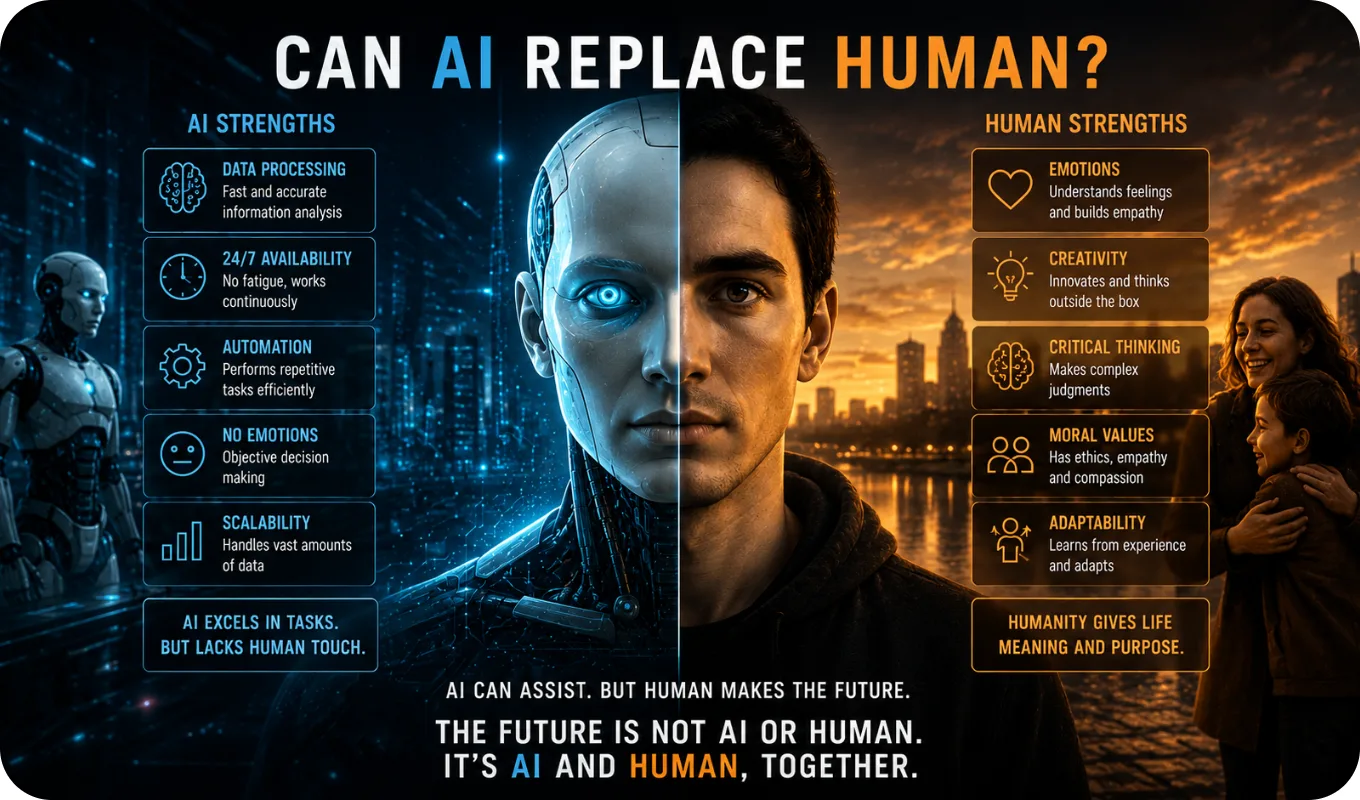
- Keep humans involved where the stakes are high. AI can support decision-making, but it should not replace human judgment in situations that require context, empathy, and accountability.
- Treat governance as ongoing. AI systems change over time, and so does the world around them. Fairness is not something you check once and forget.
- Hold organizations accountable. If a system causes harm, responsibility still belongs to the people and institutions that chose to build and deploy it.
At the end of the day, AI reflects the choices we make — what data we use, what outcomes we reward, what risks we tolerate, and whose voices we include.
That’s why the future of AI won’t be decided by the technology alone. It will be decided by the people behind it, the values they prioritize, and whether they’re willing to build systems that serve everyone, not just the already powerful.


Comments (0)
Log in or register to leave a comment.
No comments yet. Be the first to comment!