

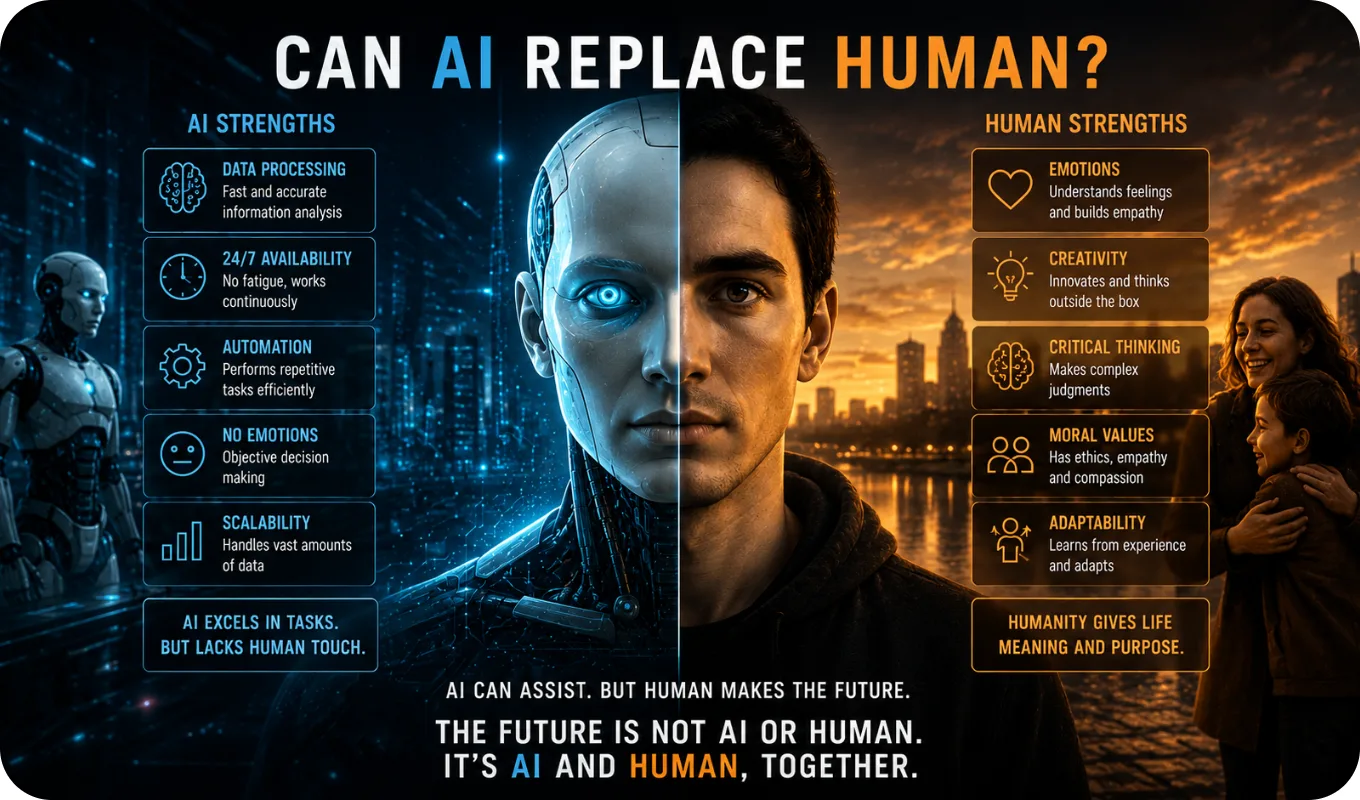
Every week, someone in my team asks some version of the same question: "Should I be worried about my job?"
And honestly? I get it. The tools we're using today — GitHub Copilot writing code, ChatGPT drafting emails, AI reviewing pull requests — would have seemed like science fiction five years ago. So the anxiety is real, and it deserves a real answer. Not a corporate non-answer, not an "AI is just a tool" brush-off. A real one.
So here's my honest take after spending the last few years living inside this shift, both as an IT and DevOps leader and as someone building content and tools around AI.
First, Let's Agree on What AI Is Actually Good At
AI is remarkably good at a few specific things:
Pattern recognition at scale. Give an AI model enough examples and it will find patterns faster and more consistently than any human. This is why it works so well for code completion, fraud detection, log analysis, and image classification.
Doing repetitive tasks without getting tired. It doesn't need coffee. It doesn't get distracted. It will run the same quality check on the 10,000th document as it did on the first.
Synthesizing large amounts of information quickly. Ask it to summarize a 200-page compliance report or pull out key risks from a vendor contract — it'll do it in seconds.
These are genuinely powerful capabilities. And yes, they will change how a lot of jobs work.
But Here's What AI Still Can't Do
This is the part that gets glossed over in a lot of breathless headlines.
AI doesn't understand context the way humans do. It generates responses based on patterns in data. It doesn't actually understand your organization, your client relationships, your team dynamics, or the reason your CTO made a decision three years ago that still shapes everything today. You do.
AI cannot take ownership. When a production system goes down at 2am, someone needs to make judgment calls under pressure, communicate with stakeholders, and own the outcome. AI can help you diagnose faster. But "the AI decided" is not something you can say to a client.
AI struggles with genuinely novel problems. It's excellent at applying known patterns to new data. But when you're facing a situation that doesn't have a precedent — a new regulatory requirement, a unique security incident, a complex ethical tradeoff — it runs out of steam quickly.
AI has no stake in the outcome. Humans care. We care about the team, about the users, about doing good work. That motivation — that accountability — is not something you can model.
What's Actually Changing (And What That Means for You)
I think the honest answer to "can AI replace humans" is: not replace, but restructure.
Some roles will shrink. Jobs that are primarily about executing well-defined, repetitive tasks — certain types of data entry, basic report generation, templated writing — those will see significant automation. That's already happening.
But more interesting is what's emerging on the other side. New roles that didn't exist three years ago. AI prompt engineers. Governance and compliance specialists for AI systems. People who audit AI outputs for bias and accuracy. AI trainers. Hybrid roles where deep domain expertise gets combined with AI tooling.
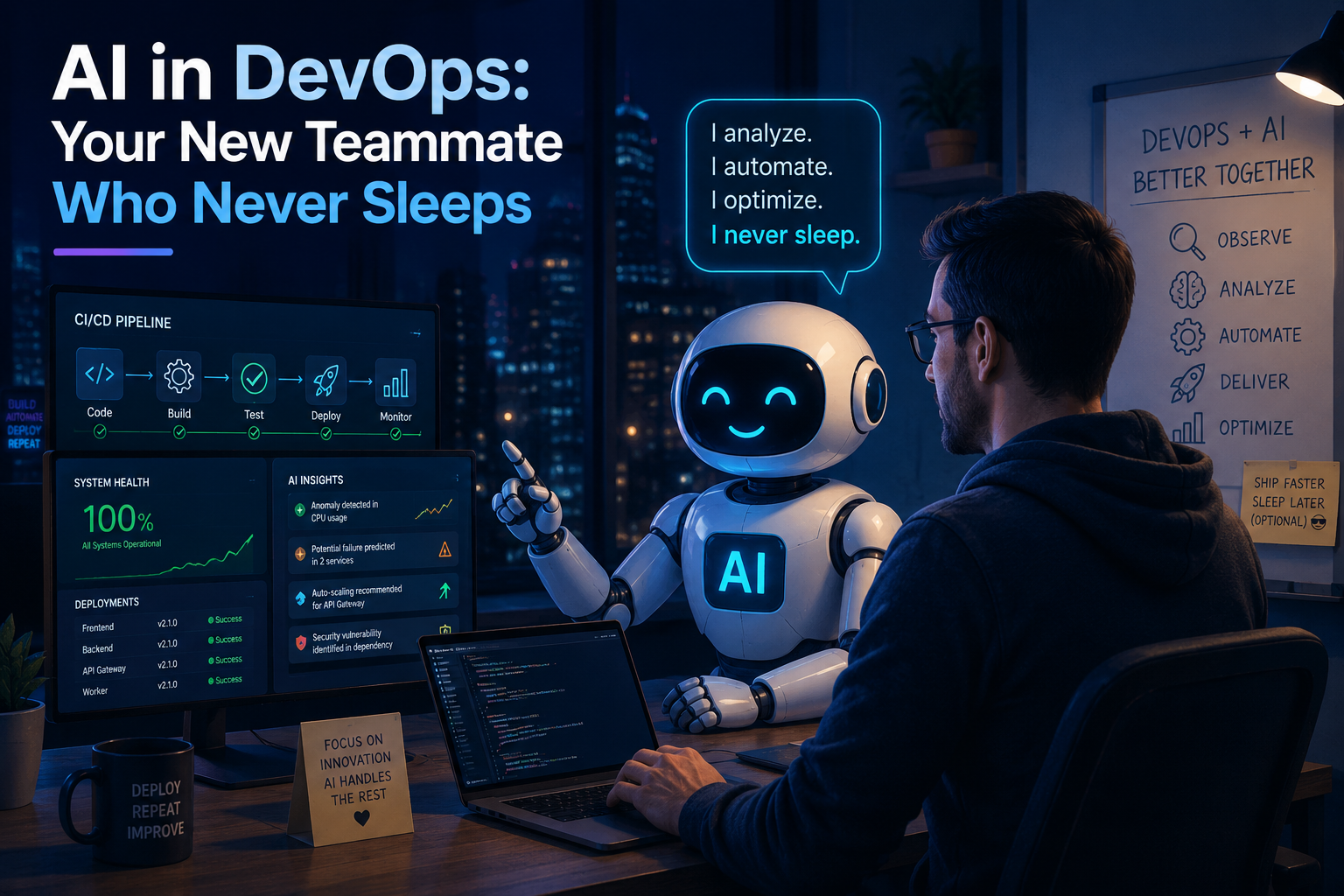
The people I see thriving right now are not the ones ignoring AI. They're also not the ones who outsource their thinking to it. They're the ones who've figured out how to use it as leverage — doing more, going deeper, moving faster — while staying firmly in the driver's seat.
A Practical Frame: Think in Tasks, Not Jobs
Here's something useful: stop thinking about whether AI will replace your job and start thinking about which tasks within your job it can handle better than you.
If you're a developer, AI can write boilerplate code. You should be spending your time on architecture, logic that requires deep domain knowledge, and code review.
If you're in security, AI can triage alerts and surface anomalies. You should be focusing on threat modeling, response planning, and the human-in-the-loop decisions.
If you're in leadership, AI can generate reports and summarize data. You should be doing what only humans can — building trust, making judgment calls, and developing the next generation of your team.
Every skill you build that sits in the "AI-resistant" category — stakeholder management, ethical judgment, creative problem-solving, genuine mentorship — is an investment that compounds.
My Take, Plainly
AI will replace some jobs. Let's not pretend otherwise.
But the more pressing truth is this: AI will more often replace parts of jobs, and in doing so, it will raise the bar on everything that's left. The work that survives automation is harder, more human, more creative, and more valuable.
The people most at risk aren't the ones whose jobs sound technical or creative. They're the ones who stop learning, stop adapting, and assume the world will stay the same.
The people who will be fine — and more than fine — are the ones who treat AI as a powerful collaborator and keep investing in the uniquely human skills that no model will replicate anytime soon.
That's not a guarantee. But it's the clearest picture I can give you.
Comments (0)
Log in or register to leave a comment.
No comments yet. Be the first to comment!